
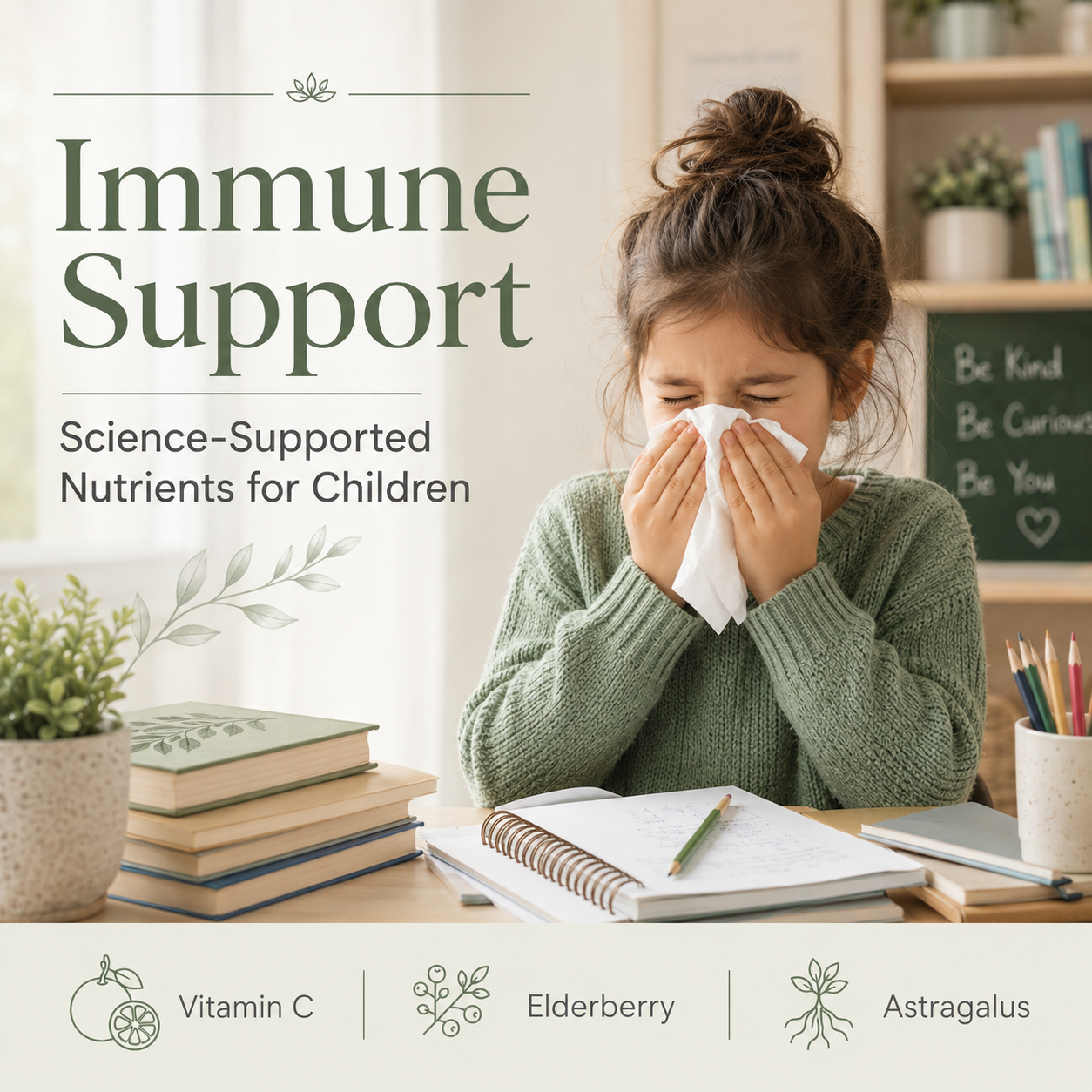
Kids’ Immune Support Has Evolved: It’s Not Just About Vitamin C Anymore
More than two-thirds of children miss at least one day of school because of illness or injury during the year.
According to CDC data, approximately 69% of school-age children missed at least one school day in the previous year, with respiratory illnesses among the most common reasons children are absent. The CDC also notes that children tend to experience more colds each year than adults.
That makes back-to-school season about more than new routines, lunches, and school supplies.
It also means returning to classrooms, shared surfaces, close contact with other children, changing sleep schedules, and greater exposure to the respiratory viruses that circulate throughout the school year.
For many parents, immune support still begins with one familiar nutrient: vitamin C.
And for good reason.
Vitamin C plays an important role in both innate and adaptive immune function. But from a functional wellness perspective, supporting a child’s immune system requires looking beyond any single nutrient.
The immune system is a coordinated network involving immune cells, antioxidant defenses, mucosal barriers, micronutrients, and complex signaling pathways.
That is where a more comprehensive approach becomes interesting.
Vitamin C: Still Foundational, But Only One Piece
Vitamin C has earned its reputation as an immune-support nutrient.
It functions as an antioxidant and contributes to multiple aspects of immune defense, including the activity of immune cells and maintenance of epithelial barriers. Research also suggests that regular vitamin C supplementation may modestly reduce the duration and severity of the common cold, particularly in certain populations.
So the goal is not to move away from vitamin C.
It is to recognize that vitamin C represents one component of a much larger biological system.
A more complete approach combines foundational micronutrients with botanical compounds that may support immune function through different mechanisms.
Elderberry: Polyphenols, Anthocyanins & Botanical Immune Support
Elderberry, or Sambucus nigra, has become one of the most recognizable botanicals used during cold and flu season.
Its dark purple berries are naturally rich in polyphenols, particularly anthocyanins—the plant compounds responsible for their deep pigmentation.
Anthocyanins are studied extensively for their antioxidant and biological activity, and elderberry preparations have also been investigated for their potential role in respiratory wellness.
One important distinction in functional supplementation is that not every elderberry product is necessarily equivalent.
The concentration of bioactive compounds can vary considerably depending on the plant material, extraction method, and formulation. This is why standardized botanical extracts can be particularly valuable: they provide greater consistency in the amount of key compounds delivered from serving to serving.
ViraKid, for example, provides 300 mg of European elderberry extract standardized to contain 13% anthocyanins.
For parents accustomed to thinking only about vitamin C, elderberry introduces another layer to a broader botanical immune-support strategy.
Astragalus: A Traditional Botanical With Modern Immune Relevance
Astragalus may be less familiar to many parents, but it has a long history of use in traditional herbal medicine.
Astragalus membranaceus contains several biologically active compounds, with astragalus polysaccharides receiving particular attention in modern research.
These polysaccharides have been investigated for their effects on immune signaling and the activity of immune cells including macrophages, natural killer cells, dendritic cells, and lymphocytes.
Much of this mechanistic research is still emerging, and astragalus should not be viewed as a treatment for infection. But from a functional wellness perspective, its ability to interact with multiple components of immune physiology makes it an especially interesting botanical.
This is one of the key differences between simply taking vitamin C and thinking more broadly about immune resilience.
Rather than relying on a single antioxidant, a comprehensive approach can incorporate nutrients and botanicals that support different aspects of normal immune function.
Zinc: Essential for Normal Immune Cell Function
Zinc is another foundational nutrient that plays a direct role in normal immune function.
It is required for cellular signaling, DNA synthesis, growth, and the development and activity of numerous immune cells.
Even relatively mild zinc inadequacy can interfere with normal immune responses, which is one reason adequate zinc intake is particularly important during childhood—a period of rapid growth and development.
From a functional perspective, zinc fits alongside vitamin C as part of the nutritional foundation upon which a healthy immune response depends.
Vitamin A: The Overlooked Immune Nutrient
Vitamin A is often associated with eye health, but its role in immunity is equally important.
It contributes to normal immune function, cellular communication, growth, and development. It also helps maintain healthy epithelial tissues throughout areas such as the respiratory and gastrointestinal tracts.
Those tissues represent an important part of the body’s first line of defense.
Before an immune cell ever needs to respond to a potential pathogen, the body relies on healthy physical and mucosal barriers to help separate the internal environment from the outside world.
That makes vitamin A an often-overlooked component of comprehensive immune support.
A Functional Approach to Immune Resilience
The goal of children’s immune support should not simply be reacting every time a child develops a runny nose.
A functional approach starts earlier.
It asks whether the immune system has the nutritional and physiological resources it needs to function normally in the first place.
Adequate sleep, nutrient-dense foods, sufficient protein, hydration, movement, outdoor activity, stress regulation, and appropriate hygiene all matter.
Targeted supplementation can then complement those foundational habits by supplying key nutrients and botanicals that support different aspects of normal immune function.
A Practitioner-Selected Option for Comprehensive Immune Support
For families looking for a more comprehensive approach than vitamin C alone, our practitioners selected ViraKid.
ViraKid combines vitamin C with standardized European elderberry extract, astragalus root extract, zinc, and vitamin A—bringing together foundational nutrients and botanical compounds in one children’s formula.
Explore ViraKid:
https://valleyintegrativerx.com/search?q=Virakid
References:
Centers for Disease Control and Prevention. When Students or Staff Are Sick. CDC Children & School Preparedness.
Centers for Disease Control and Prevention. Associations Among School Absenteeism, Gastrointestinal and Respiratory Illness, and Income — United States, 2010–2016.
National Institutes of Health Office of Dietary Supplements. Dietary Supplements for Immune Function and Infectious Diseases: Health Professional Fact Sheet.
National Institutes of Health Office of Dietary Supplements. Vitamin A and Carotenoids: Health Professional Fact Sheet.
Zheng Y, et al. Astragalus polysaccharide: a review of its immunomodulatory effect.
Always consult your child’s pediatrician or qualified healthcare practitioner before introducing a new dietary supplement, particularly if your child has a medical condition or takes medication.
These statements have not been evaluated by the Food and Drug Administration. Dietary supplements are not intended to diagnose, treat, cure, or prevent any disease.